
$6.97
Add to Cart
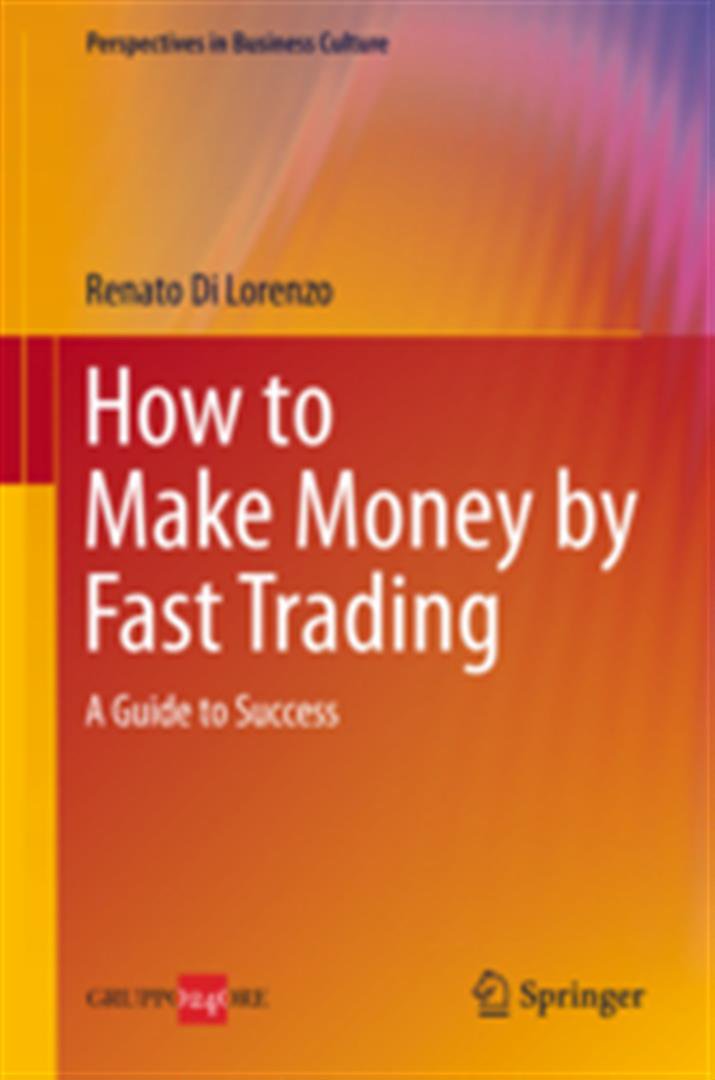
How to Make Money by Fast Trading
Only 1 available
Details
Shipping: Australia: free (more destinations)
Condition: Brand new
*The store has not been updated recently. You may want to contact the merchant to confirm the availability of the product.
It may have been the crisis or a natural evolution, but all over the world a growing
number of people look at trading the markets as a second job in addition to their
first one, or even as a full-time job if they should have lost the first one. They
perhaps may have no other alternative, due to their age, or they may have been
attracted to this activity by the circumstance that trading the markets implies
freedom, in particular it does not involve commuting every morning and night, or
having a boss that one not always esteems but whose orders have to be fulfilled
and so on.
Thus a growing number of people spend part of their time—not necessarily the
most part—in front of a PC, connecting to the platform of their broker online, and
they buy and sell in the world markets assets of the most different kinds: gold, oil,
shares, bonds, and so forth.
Once upon a time, when the markets crashed, this was a reason to stay awake in
the night because the common Joe knew only how to long the markets; the short
positions were badly understood and in some cases it was difficult to realize them in
practice. Today there is no problem to short almost any class of assets; therefore
half of the main reasons why people once lost money—i.e., the necessity of markets
going up and not down—has disappeared.
Being long or short is indifferent to the trader today; he has only one problem
(clearly not at all trivial): being on the right side of the market.
Another reason why not many years ago it was difficult to trade the markets for a
person that had a regular job was that when he had time to do that—i.e., after the
regular job—the markets were closed. Today also this obstacle has been removed:
many markets—albeit in some cases foreign markets1—are open until late in the
night, not to mention the Forex, which practically is always open.
--
Not
After receive payment you will receive download link in paypal email address
Thanks
number of people look at trading the markets as a second job in addition to their
first one, or even as a full-time job if they should have lost the first one. They
perhaps may have no other alternative, due to their age, or they may have been
attracted to this activity by the circumstance that trading the markets implies
freedom, in particular it does not involve commuting every morning and night, or
having a boss that one not always esteems but whose orders have to be fulfilled
and so on.
Thus a growing number of people spend part of their time—not necessarily the
most part—in front of a PC, connecting to the platform of their broker online, and
they buy and sell in the world markets assets of the most different kinds: gold, oil,
shares, bonds, and so forth.
Once upon a time, when the markets crashed, this was a reason to stay awake in
the night because the common Joe knew only how to long the markets; the short
positions were badly understood and in some cases it was difficult to realize them in
practice. Today there is no problem to short almost any class of assets; therefore
half of the main reasons why people once lost money—i.e., the necessity of markets
going up and not down—has disappeared.
Being long or short is indifferent to the trader today; he has only one problem
(clearly not at all trivial): being on the right side of the market.
Another reason why not many years ago it was difficult to trade the markets for a
person that had a regular job was that when he had time to do that—i.e., after the
regular job—the markets were closed. Today also this obstacle has been removed:
many markets—albeit in some cases foreign markets1—are open until late in the
night, not to mention the Forex, which practically is always open.
--
Not
After receive payment you will receive download link in paypal email address
Thanks
Other Products from globale (View All)
-
$2.09
-
$1.39

-
$20.91

-
$2.79
-
$6.97

-
$2.79

-
$2.09

-
$4.18
-
$1.81
-
$2.79